The Art of Collecting
Real questions, artist hot-takes, and a fresh perspective on living with artCollecting art is NOT soley reserved for museums or deep-pocketed art experts. Oh, definitely not.
Over the years of running a print studio, I’ve had countless questions in my inbox that all circle around art: creating it + collecting it.
Collecting art doesn’t have to feel elite or mysterious. In fact, I believe it can be one of the most personal, empowering, and soul-nourishing things you do. Whether you're choosing your very first print or curating a growing collection, this guide is here to help you approach your art-collecting journey with confidence, clarity, and joy.
Art collecting CAN be approachable. Not just a hopeful oh, maybe one-day.
So, what’s getting in the way?You might feel unsure of where to start. You might wonder: Am I “allowed” to collect art if I’m not an expert? Or, I don’t know enough about quality and framing! What if it’s not the “right” piece? Or, maybe you’ve just never felt “invited in” to the world of art collecting… like it belonged to someone else. A person with a different kind of home or a bigger budget.
Let’s demystify this together. Here’s what I’ve learned over years of collecting, creating, and connecting.
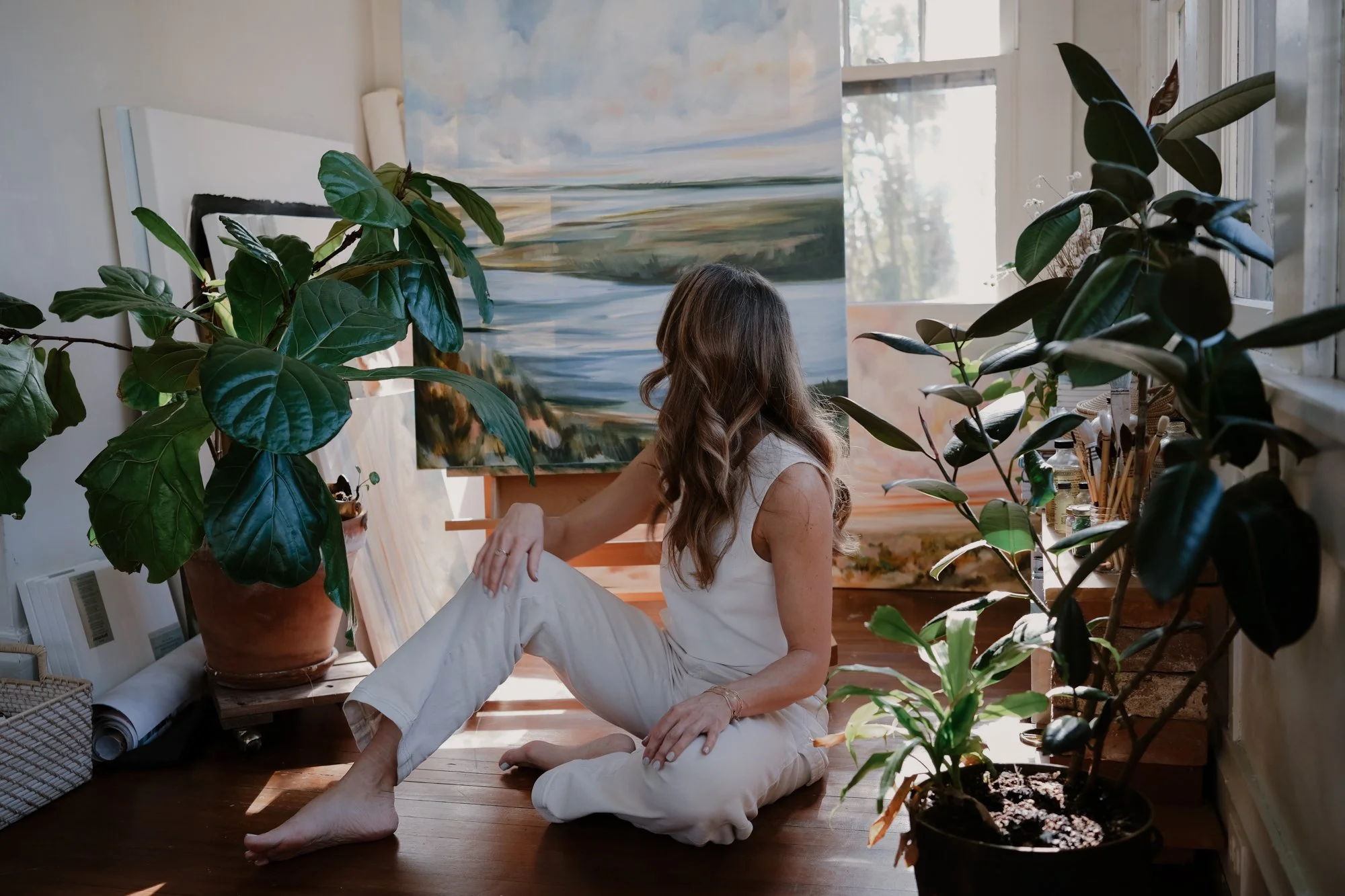
What makes art valuable or collectible?
Value in art is deeply personal. And also can be shaped by craftsmanship, story, and your connection. Here’s how I see it: emotional value always comes first. If a piece moves you, comforts you, inspires you, that’s real value.
Art is meant to resonate with the viewer. And the artist’s vision plays a part. Collectible art often carries the mark of an artist with language, saying something meaningful or connecting to you through their work and evolving over time.
That connection increases value. When you know the story behind a piece (the why, the process, the hands that made it), it becomes more than just decor. It becomes part of your story, too.
Quality & materials matter! Archival inks, museum-grade canvas, quality preparation…these are signs that a piece was created to last. That adds to both emotional and financial value.
On that note, limited editions or one-of-a-kind works add rarity. Knowing you own something few others have is special. So, while the art world sometimes defines value by market trends or galleries, I really feel true value is built through relationship: with the art + the artist + yourself.
Which leads into the next question…

How do I start collecting fine art for the first time?
Collecting fine art doesn’t have to be intimidating, or reserved for big pocket experts. That’s so out. Begin by noticing what draws you in and excites you. What colors, compositions, or feelings do you keep coming back to? What kind of imagery makes you feel at home, inspired, or at ease?
Then follow that curiosity! Browse artists in your feed. Look up some local galleries and museums near your city. Sign up for collectors’ emails (like mine! It’s beautiful) and start learning the language of what resonates with you. A collection is built one meaningful piece at a time, and it doesn’t need to be expensive or massive to be valuable to you. In fact, the most beautiful collections are those that reflect the collector’s storytelling, connections, and is more of a heartfelt connection than solely an investment for what may go with your furniture.
When you’re ready to buy a piece, consider where you’ll enjoy it most, and don’t wait for the “perfect spot” to start. Art isn’t meant to be saved for later; it’s meant to live with you.
You don’t need to be an art expert.
You just need to enjoy what you’re bringing into your life.
How do I know if a print or painting will hold its value over time?
The value of a piece of art is often more than one answer.
There’s the tangible market value, which can fluctuate. And, then there’s the personal value, which is the emotional resonance you have with a piece that deepens with time.
When it comes to market value, pieces that are part of limited editions, created with archival materials, and made by artists with a growing or established career tend to hold and even increase in value over time. That’s why I use museum-quality canvas and fine art papers and inks, and and my limited editions prints are truly limited.
But the deepest value? That’s what the piece brings into your life. How it reflects your story, your space, your season of life. If a work makes you feel something (seen, touched, inspired, connected) that meaning deepens with time. When you feel a quiet oh yesss in you, a sense of connection or beauty, that’s your taste telling you, this is meaningful. And that’s what truly lasts.

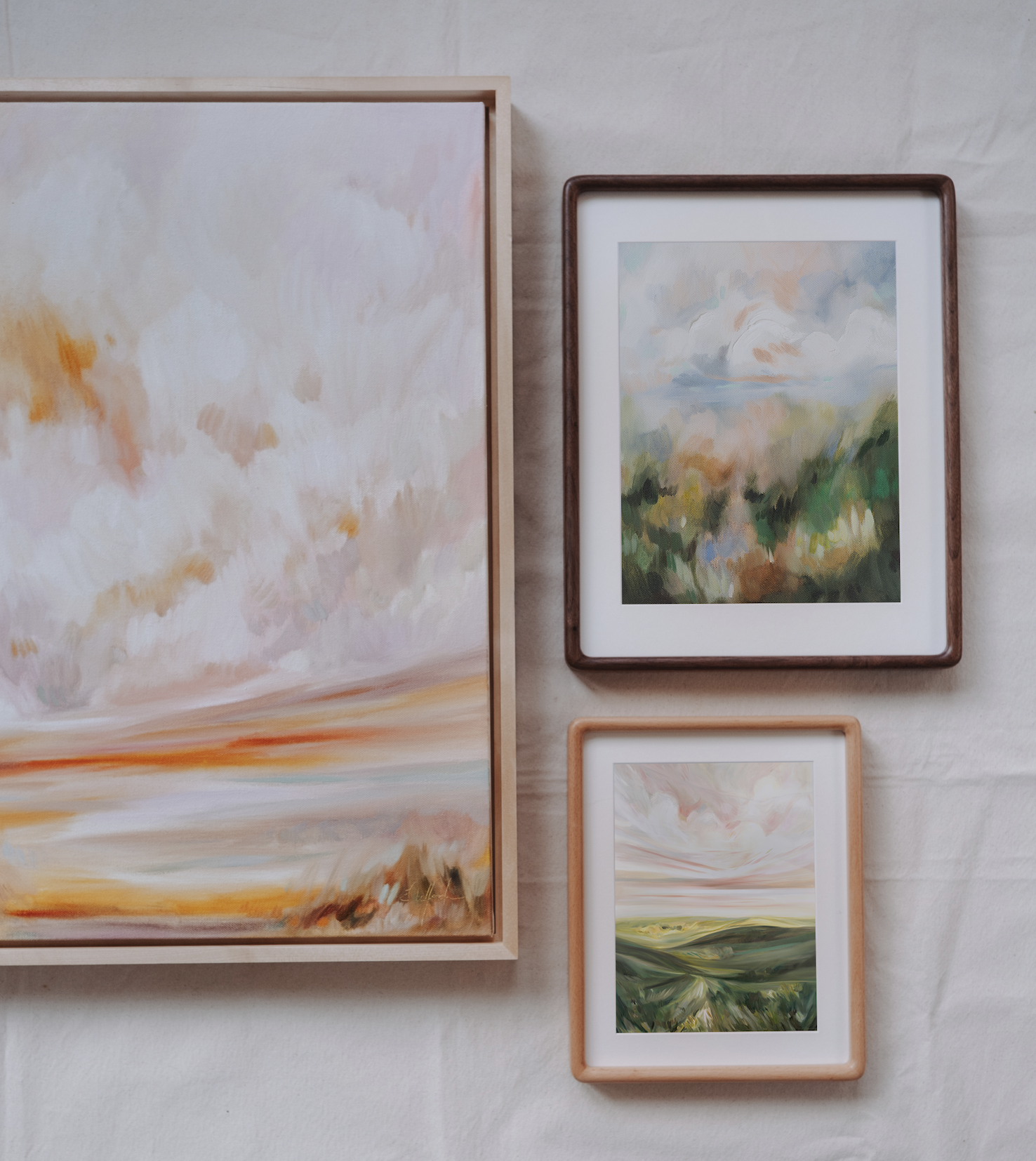
Can you tell the larger piece is the original, and the other two are prints? Giclée prints are that good!
What’s the difference between an original painting and a print?
An original painting is the heartbeat of my creative process. It's a one-of-a-kind piece that carries the full texture, emotion, and presence of the moment it was created. Every brushstroke is layered with intention. The canvas holds my time, attention and energy of the studio, the process, and the story unfolding in real time. There’s only one in the world. Which means no one else in the world will have the same piece. Collecting an original is welcoming a living rarity into your home, and is truly special.
That’s a HUGE reason to get on artist’s newsletters to be in the know when new pieces are available!
A print, by contrast, is a faithful reproduction, made to honor the energy of the original, but at a more accessible price point and diverse sizing. My prints are produced with museum-quality archival materials, carefully color-matched, and printed in-house to preserve the integrity of the original work. They're a beautiful way to bring art into your everyday life, especially if you’re just starting your collection or want to live with a piece that speaks to you.
Both have their place! Originals are for when you want to invest in something truly singular and special, while prints allow for way more accessibility. The magic? You get to choose how art lives with you.
Are all art prints the same? What makes a giclée different?
Going to get nerdy for a second: The term print can mean a wide range of things, from mass-produced poster prints to fine art reproductions. A giclée (pronounced zhee-CLAY) is a specific kind of high-quality print made using archival inks on museum-grade canvas or paper. It captures the color, texture, and detail of the original beautifully and can be a more accessible way to bring fine art into your space. These prints are designed to last for decades without fading and are often indistinguishable from the original work in color and detail. My prints are made with the same care and intention as my originals… carefully produced in house on a commercial printer, color-matched, and prepared to last a lifetime.
Here’s how to spot a giclée:
It’s printed on textured paper or stretched canvas, not thin poster paper.
The colors are rich and nuanced, matching the original artwork closely.
It may come signed, numbered, or as part of a limited edition.
It will often be labeled as archival or giclée by the artist or seller somewhere in the description. Not all sellers share all the details, but it’s an obvious way to know.
By contrast, lower-quality prints might be mass-printed using dye-based inks on lightweight paper, which can fade or yellow over time. That doesn’t mean you can’t love them, but it’s good to know the difference when investing in your collection.
Think of a giclée as a bridge between an original and a mass-market print. It captures the energy of the artwork while being more accessible. And when treated with care, it can become a cherished heirloom of its own.
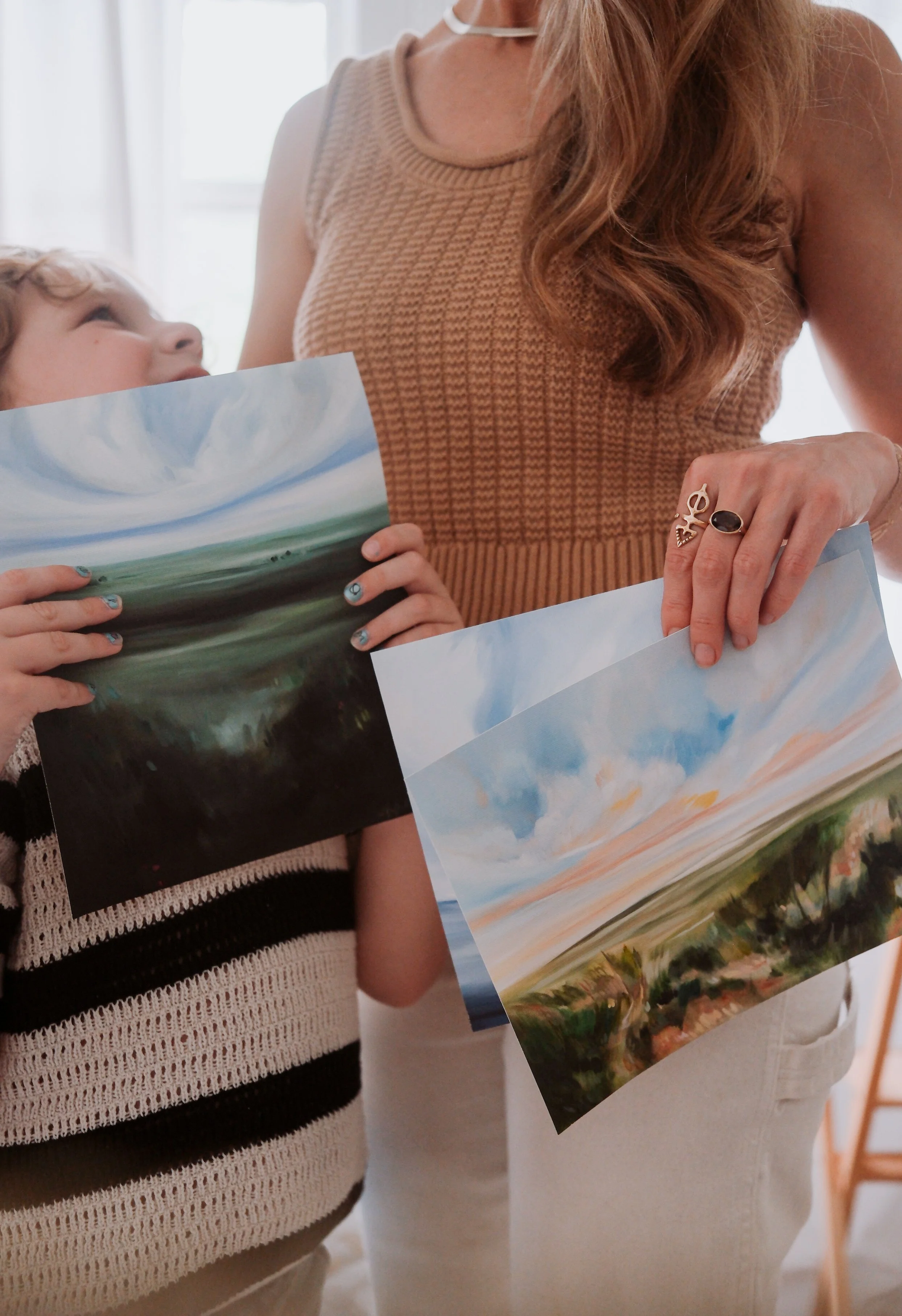
Hot take: Art brings joy when it’s part of your space.
Let it be a presence, not a project.

How do I frame my print so it doesn’t sit rolled up for months?
I get it, life is busy. And even the most beautiful print can end up waiting on a shelf. But art is meant to be seen and lived with…not stored away for the perfect time and place (there’s a metaphor in there somewhere, I can feel it ;)
Here are a few tips to make sure your print finds its place:
Decide where it’s going as soon as you bring it home. Even if it moves later, having a spot in mind makes the next steps easier.
Use my Framing Guide. I created this one to walk you through exactly how to frame your print with ease and confidence, whether you're going the custom route or picking up a ready-made frame.
Don’t overthink it. A simple, clean frame that lets the art breathe is always a good choice.
Frame now, place later. If you’re not sure where it will live, go ahead and frame it anyway. Once it’s behind glass and ready to hang, it’s much more likely to make its way onto your wall, and into your daily life. And not get squished in storage!

Where do I begin if I want to build a meaningful collection?
Begin with intention. Ask yourself:
What kind of art do I want to live with?
What imagery brings me peace or sparks inspiration?
What colors or themes feel like home?
Let those answers lead you. Collect work that feels honest, whether it’s a painting, a print, or something you found on your travels. Mix originals with high-quality prints. Layer stories and textures.
Support living artists when you can! It adds to your space AND supports someone’s dream. And let your collection grow slowly, organically. Each piece is a page in your visual story.
Most importantly, there’s no wrong place to begin. Just begin.
You don’t have to be an art expert to choose what speaks to you.
You’re allowed to trust your instincts.
You’re allowed to create a space that reflects who you are and where you’re going.
Art is meant to be personal. It’s allowed to feel like a mirror. So take your time. Ask questions. Collect pieces just to share with those you love. Save what you love. And when something gives you that quiet, yes: follow it.
Your collection is already beginning… one beautiful piece at a time.